






Tirzepatide is a prescription medication used to manage type 2 diabetes and support chronic weight management. It works by mimicking two hormones used in appetite regulation and blood sugar control, helping reduce hunger, increase feelings of fullness, and regulate how the body processes food.
But how does tirzepatide work and how does it affect different parts of the body? Understanding how this medication affects your brain, stomach, pancreas, and metabolism can help you make better decisions about your weight management options.
How does Tirzepatide work?
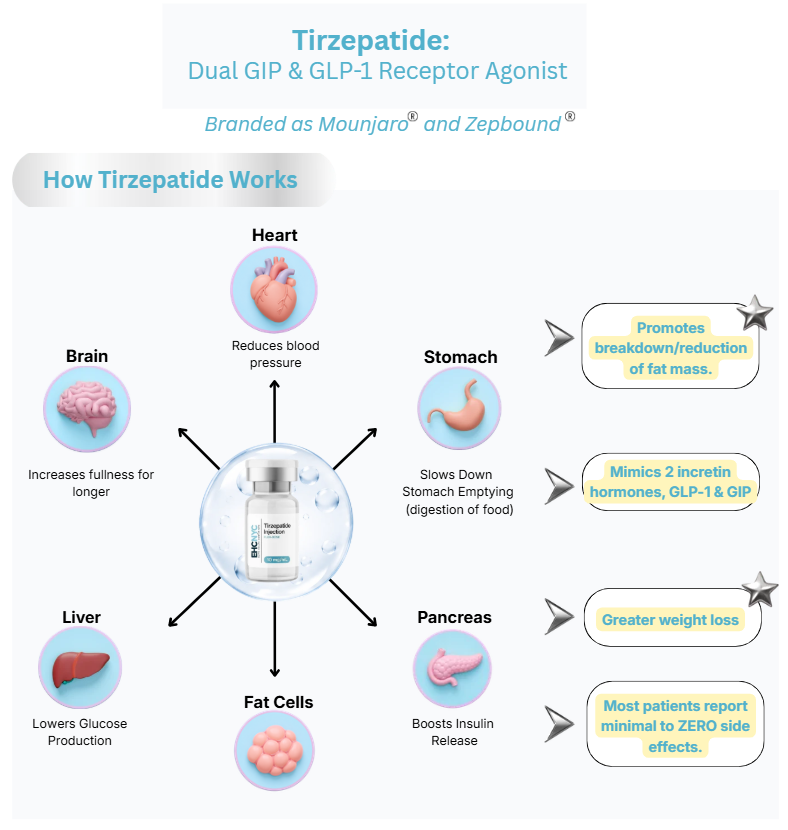
Tirzepatide injections work through several interconnected processes. It acts on hormone receptors involved in appetite regulation, slows the rate at which food leaves the stomach, and helps the body respond appropriately to elevated blood sugar levels.
Here is how compounded tirzepatide affects different parts of the body.
1. The brain: Helps control appetite and food noise
Tirzepatide activates GLP-1 and GIP receptors involved in appetite regulation. These receptors influence signalling pathways that help the brain recognize hunger and fullness.
As a result, people taking tirzepatide may experience reduced hunger, fewer cravings, and a greater sense of satisfaction after eating. Some people also report a reduction in “food noise,” a term used to describe persistent thoughts about food, cravings, or eating.
2. The stomach: slows gastric emptying
Another way tirzepatide supports weight loss is by slowing gastric emptying, which is the process through which food moves from the stomach into the small intestine.
When food remains in the stomach longer, you may feel full for an extended period after eating. This can help reduce the urge to snack between meals and make it easier to recognize when you have had enough to eat.
Tirzepatide can also cause digestive side effects, including nausea, vomiting, diarrhoea, constipation, and abdominal discomfort.
Learn more:
Tirzepatide vs Semaglutide Side Effects: Comparison Chart
3. The pancreas: Supports insulin release
Insulin is a hormone produced by the pancreas that helps move glucose from the bloodstream into the body’s cells for energy.
When blood sugar levels rise after eating, tirzepatide helps stimulate insulin release in a glucose-dependent manner. This means its effect on insulin secretion depends on blood glucose levels.
By supporting the body’s natural insulin response, tirzepatide can help improve blood sugar control in people with type 2 diabetes.
4. The liver: Helps regulate glucose production
The liver produces and releases glucose to provide the body with energy between meals. However, excessive glucose production can contribute to elevated blood sugar levels, particularly in people with type 2 diabetes.
Tirzepatide helps regulate blood glucose partly by improving insulin-related signalling and reducing inappropriate glucagon secretion. Glucagon is a hormone that signals the liver to release stored glucose.
Together, these effects help the body maintain more stable blood sugar levels.
5. Body fat: Supports overall fat loss
Tirzepatide supports overall body fat reduction by helping regulate appetite, increase fullness, and reduce calorie intake. When the body consistently uses more energy than it receives from food, it can draw on stored energy, including body fat.
Individual results vary, and the amount of fat lost depends on factors such as dosage, treatment duration, nutrition, physical activity, and individual physiology.
How long does Tirzepatide take to work?
Tirzepatide begins working in the bloodstream within 8 hours to 3 days after the first injection. However, noticeable changes in appetite, weight, and blood sugar develop gradually.
Treatment typically starts at a low dose to help your body adjust, with increases every four weeks as directed by your healthcare provider. Keep in mind that everyone responds differently to tirzepatide. Your starting dose is intended to help your body adjust, and meaningful results may take time. Follow your healthcare provider’s dosing instructions rather than increasing your dose to accelerate weight loss.
Learn more:
Tirzepatide Dosage and Titration Schedule
Understanding your Tirzepatide treatment options
Understanding how tirzepatide works is an important first step in determining whether prescription weight management treatment may be right for you. By influencing appetite, digestion, and blood sugar regulation, tirzepatide can help individuals achieve weight loss goals when used as part of a medically supervised treatment plan.
At Elite Health Center, our team can help you explore your weight management options, understand the potential benefits and risks of treatment, and determine the next steps based on your needs. Contact Elite Health Center to discuss whether tirzepatide may be right for you.
Disclaimer: This blog is for informational purposes only and should not replace professional medical advice. Always consult a healthcare provider for guidance tailored to your needs.
Explore more on Tirzepatide:
Tirzepatide vs Semaglutide: Which is Right for You?
Microdosing GLP-1: A Low-Dose Strategy vs Standard Protocols