







Semaglutide has become a widely used medication for managing type 2 diabetes and supporting weight management. Sold under brand names such as Ozempic and Wegovy, semaglutide works by mimicking a natural hormone in the body that helps regulate appetite, digestion, and blood sugar levels.
But how does Semaglutide work and how does it affect different parts of the body? Understanding how this medication works can help you make informed decisions about your health and discuss potential treatment options with your healthcare provider.
How does Semaglutide work?
Semaglutide injections work by imitating the action of this hormone and activating GLP-1 receptors in the body. This helps stimulate insulin release when blood sugar levels are elevated, reduce the release of glucagon, slow stomach emptying, and regulate appetite. Rather than targeting just one area, it affects multiple systems that work together to help regulate the body’s response to food. Learn more about compounded semaglutide.
Here is how semaglutide affects four key areas of the body.
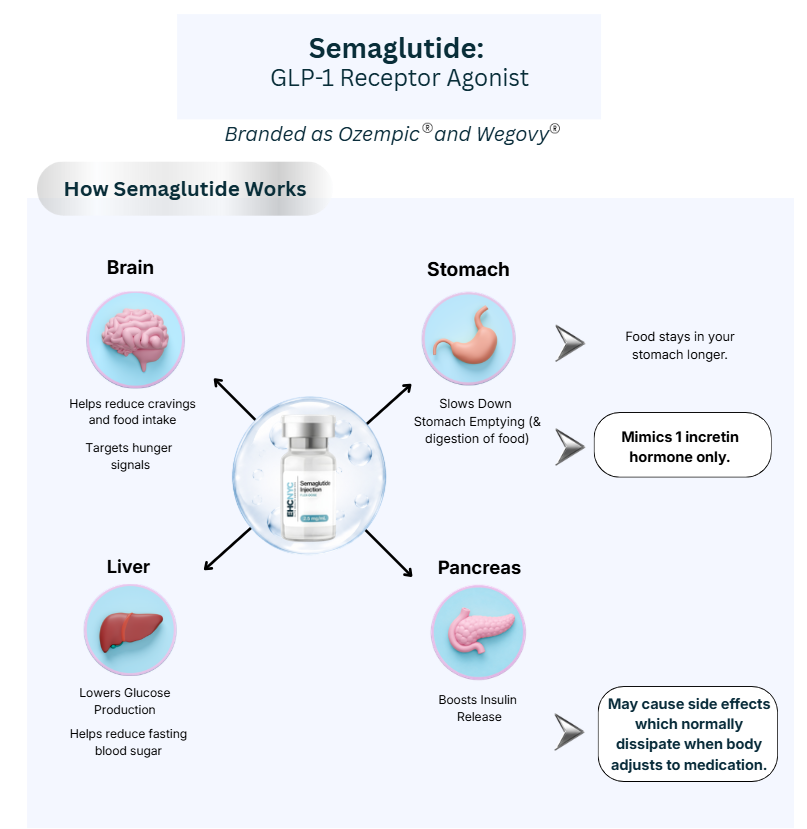
1. The brain: Helps regulate hunger and appetite
Semaglutide acts on areas of the brain involved in appetite regulation and food intake. By influencing these signals, it can help reduce hunger and cravings, making it easier for some people to feel satisfied with smaller portions.
This effect can reduce overall calorie intake and support weight loss over time.
For people using semaglutide for weight management, changes in appetite may be one of the most noticeable effects of treatment. However, individual experiences vary, and the medication does not eliminate hunger for everyone. Learn more about semaglutide and appetite.
2. The stomach: Slows stomach emptying
Semaglutide can slow the rate at which food leaves the stomach, particularly during the early stages of digestion. This process, known as delayed gastric emptying, can help people feel full for longer after eating.
By slowing digestion and influencing appetite signals, semaglutide may help reduce the amount of food consumed throughout the day.
However, delayed stomach emptying can also contribute to gastrointestinal side effects, including nausea, bloating, and a feeling of fullness. Semaglutide side effects may be more noticeable when starting treatment or increasing the dose.
Learn more:
List of Foods to Eat While on Semaglutide
List of What Not to Eat on Semaglutide
3. The liver: Helps reduce glucose production
The liver plays an important role in maintaining blood sugar levels. It releases glucose into the bloodstream, including between meals, to provide the body with energy.
Semaglutide helps regulate this process indirectly by reducing the release of glucagon, a hormone that signals the liver to release glucose. This effect is glucose-dependent, meaning semaglutide’s impact on insulin and glucagon secretion responds to blood sugar levels.
By helping limit excess glucose production, semaglutide can support better blood sugar control, particularly in people with type 2 diabetes.
Learn more:
How Much Protein Should I Eat While On Semaglutide for Weight Loss?
4. The pancreas: Supports insulin release
The pancreas produces insulin, a hormone that helps move glucose from the bloodstream into cells for energy.
When blood sugar levels are elevated, semaglutide stimulates the pancreas to release insulin. At the same time, it reduces glucagon secretion, helping the body manage blood glucose more effectively.
Because these effects are glucose-dependent, semaglutide generally has a lower risk of causing low blood sugar when used alone than some other diabetes medications. However, the risk can increase when it is combined with insulin or certain other blood sugar-lowering medications.
How long does Semaglutide take to work?
Semaglutide starts working in the body shortly after the first dose, but noticeable effects vary from person to person. Depending on the formulation, semaglutide can begin acting within hours and reach peak blood concentrations approximately one to three days after an injection.
Some people begin noticing changes in appetite within the first few days or weeks of treatment. These changes may include:
- Reduced appetite: Feeling less hungry throughout the day.
- Increased fullness: Feeling satisfied sooner and staying full for longer after meals.
- Fewer cravings: Experiencing less desire to snack or eat between meals.
- Reduced food noise: Thinking less frequently about food or feeling less preoccupied with eating.
Treatment typically begins at a lower dose, which may be increased gradually according to the prescribed schedule. This approach helps improve tolerability and reduce gastrointestinal side effects. Follow your healthcare provider’s instructions, and do not increase your dose or change your treatment schedule on your own.
Learn more:
Guide to Semaglutide Titration and Dosage Schedules
Understanding your Semaglutide treatment options
Semaglutide works by mimicking the GLP-1 hormone to influence appetite, slow stomach emptying, and support blood sugar regulation. These combined effects explain why it may be prescribed for type 2 diabetes or weight management, depending on the product and the individual’s health needs.
Although semaglutide can offer meaningful benefits for eligible patients, it is not suitable for everyone and can cause side effects. Understanding how Semaglutide works is an important first step in determining whether it may be appropriate for you.
Considering semaglutide for weight management? Contact Elite Health Center to discuss your goals and find out whether semaglutide may be right for you.
Disclaimer: This blog is for informational purposes only and should not replace professional medical advice. Always consult a healthcare provider for guidance tailored to your needs.
Explore more on Semaglutide:
Semaglutide Cost Without Insurance: What You Need To Know
Tirzepatide vs Semaglutide Side Effects: Comparison Chart
How Long Does Compounded Semaglutide Last? Expiration, Storage, Safety